
LUUM Journal · Science & botany
The Melipona bee and why it matters to the Maya rainforest
Who the Xunán Kab is, how it lives, why it is essential to the rainforest and to Maya culture, and why protecting it matters today.
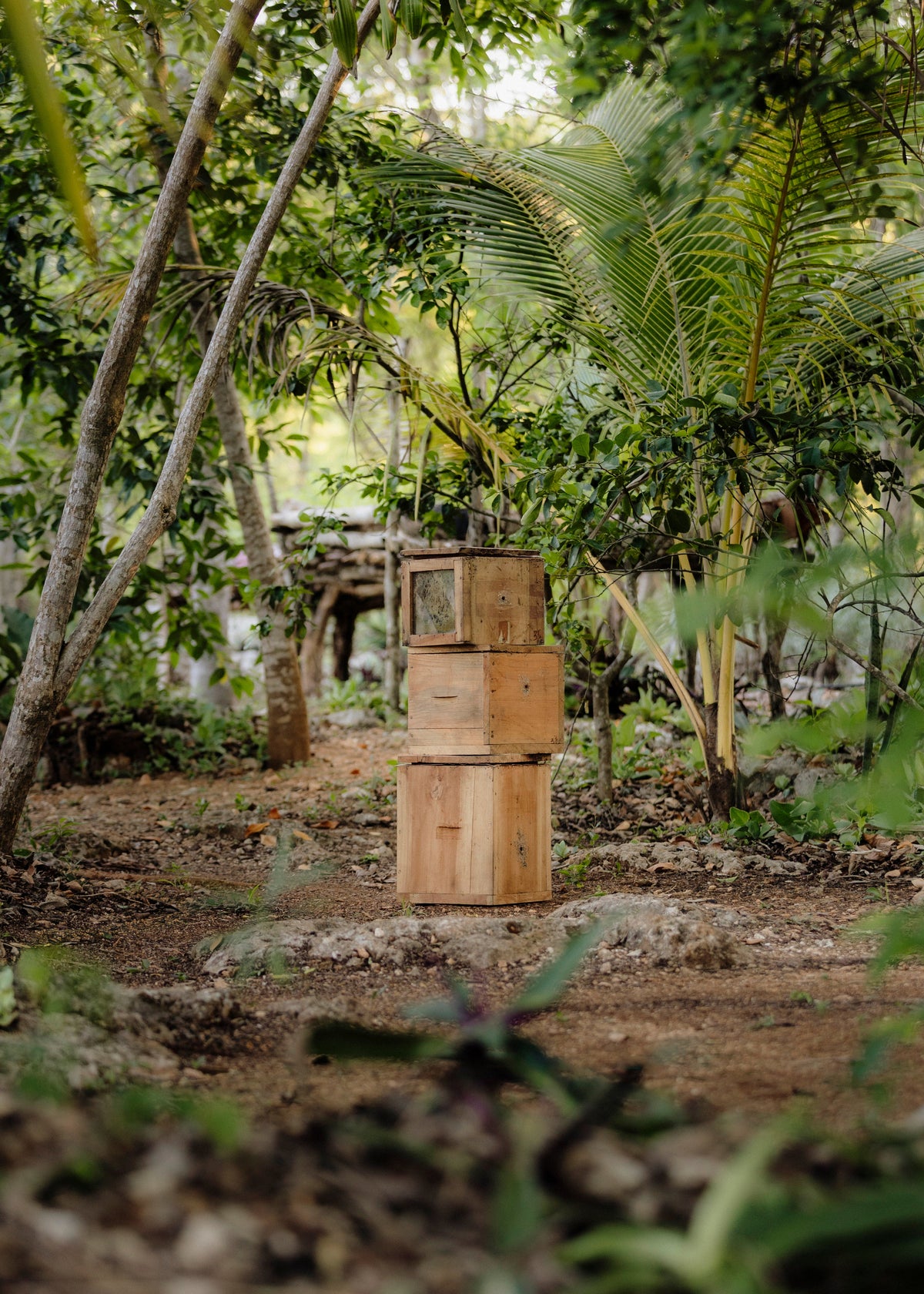
In Maya it is called Xunán Kab, often translated as “the lady bee” or “the royal lady.” It is small, has no sting and has accompanied the Maya peoples of the Yucatán Peninsula since pre-Hispanic times.
A different kind of bee
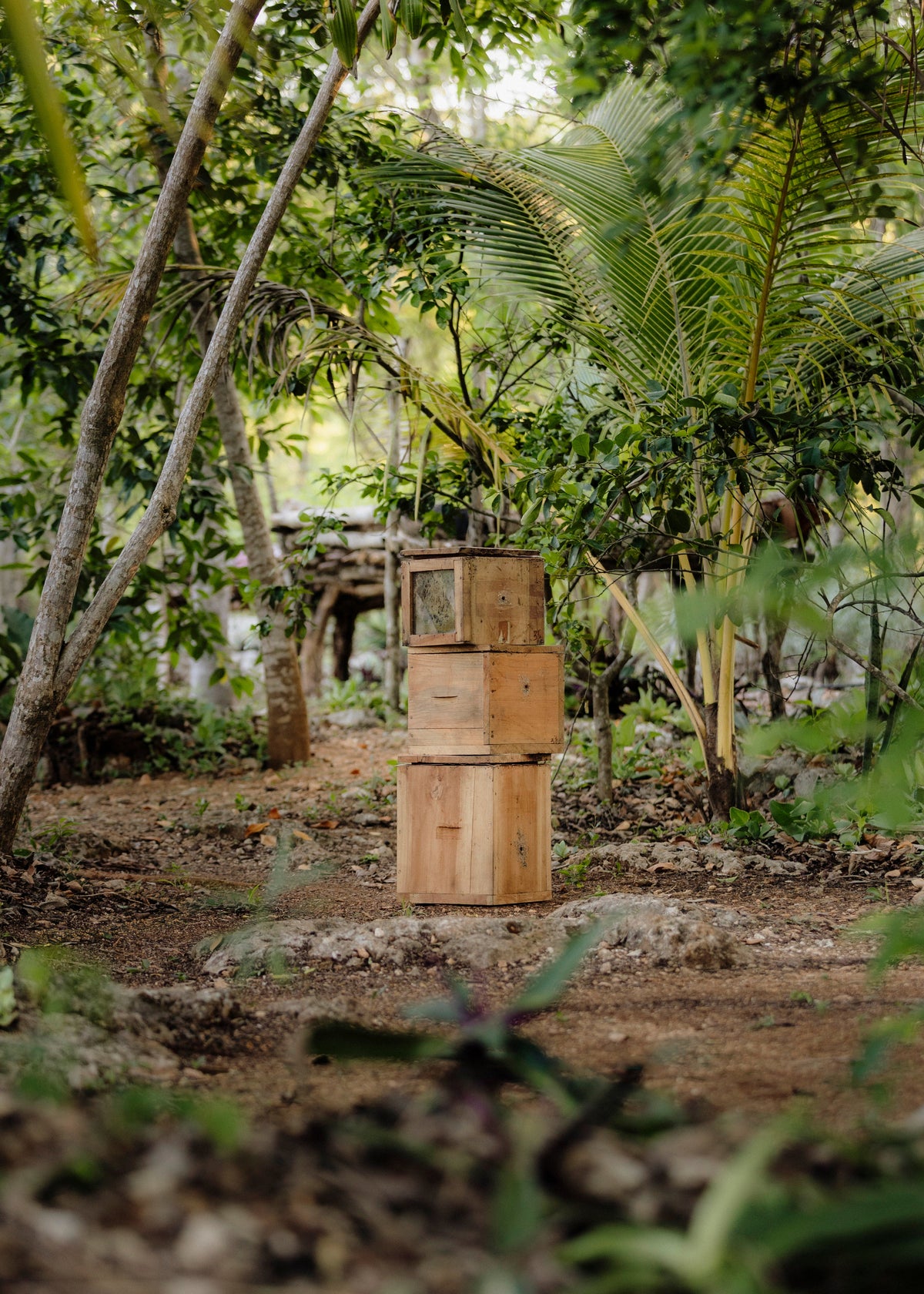
Melipona beecheii belongs to the stingless bees, a group native to tropical regions. It lives in small colonies inside hollow logs and stores its honey and pollen in pots of wax and resin. It is gentle: it defends itself by closing the entrance to its nest, not by stinging.
Its role in the rainforest
As a pollinator, the Melipona visits the flowers of many native plants of the Maya rainforest. Its work helps those plants reproduce and, with that, keeps the ecosystem in balance. Caring for the bee is also caring for the rainforest.
A centuries-old relationship
Meliponiculture is a Maya practice with a very long history. Colonies were kept in jobones hung in the yards of homes, and their honey was used in food, in ceremonies and in traditional medicine. The bee held a place in the spiritual life of the communities.
A bee at risk
Deforestation, changes in land use and the loss of traditional knowledge have reduced the number of colonies. Today, families and cooperatives —many of them led by women— work to keep the practice alive and recover colonies.
How we work at LUUM
Melipona honey is scarce: around one liter per colony a year. That is why we source it through direct relationships with producers at origin, in small batches and with traceability, and we use an extract instead of raw honey. Our goal is for the ingredient's value to reach those who protect the bee and its rainforest.
To learn what its honey contains, read Melipona honey: what it is and its properties for the skin.
This article is editorial content from LUUM Skincare, for information only. LUUM is a cosmetic: it helps improve the appearance of the skin, and results vary from person to person. It does not replace a consultation with a health professional.